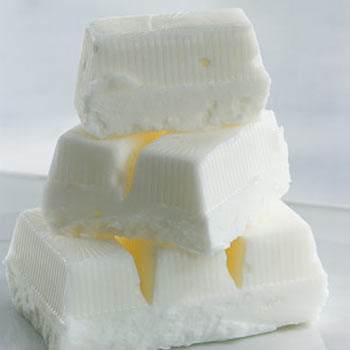
Processed chemicals that are used in foods have seriously detrimental effects on human health and energy levels and have no place in the modern human diet. To examine how processed chemicals impact human health, we will examine hydrogenated oils, also known as trans fats. We will see how these oils, which are healthy in their natural state, quickly turn into poisons through the manufacturing and processing.
Hydrogenated oils undergo an extensive transformation process. Healthy oils such as palm, kernel, soybean, corn oil or coconut oil are heated anywhere from five hundred to one thousand degrees under several atmospheres of pressure. Next, they are injected with a metallic catalyst (nickel, platinum or aluminum) for several hours. The catalyst bubbles up into the oil, changing the molecular structure and increasing the density of the oil. Now, instead of the oil being in a liquid state at room temperature, it is either a…
After coffee, one of my favorite substances to ingest has to be eggs. In the 1980’s a lot of manipulative politics and biased interest conflicted science went into demonizing eggs over the fat and cholesterol content. Independent research a decade later confirmed, re-confirmed, and re re-confirmed that whole eggs are in fact very nutritious and positively healthy, because of the micronutrient profile inherent in the yoke, and the realization that blood cholesterol levels are not the primary cause of cardiovascular disease in otherwise healthy adults.
But old bad info dies hard, and negative info is way more powerful than positive info among humans. That’s why coffee continues to be demonized by so many in the health food world (while other natural herbs are universally lauded).
So here’s further evidence (albeit anecdotal) of how eggs affect you in a neutral, or positive way. Click this.
Another excellent post by a well informed professional. I’d like to add that there are also a slew of negative environmental factors involved in te production of HFCS that are often overlooked by critics. When consuming sweet products, demand real sugar!
High-fructose corn syrup (HFCS) comprises any of a group of corn syrups that has undergone enzymatic processing to convert some of its glucose into fructose to produce a desired sweetness. It is used in food products to enhance shelf life. According to the USDA, HFCS is composed of 24% water, and the rest sugars. It is very common in processed foods and beverages in the United States. The most widely used varieties of high-fructose corn syrup are: HFCS 55 (mostly used in soft drinks), approximately 55% fructose and 42% glucose; and HFCS 42 (used in beverages, processed foods, cereals and baked goods), approximately 42% fructose and 53% glucose.
In the U.S., there has been a major transition from sucrose (table sugar) to HFCS in the food industry. Factors causing this transition include governmental production quotas of domestic sugar, subsidies of U.S. corn, and an import tariff on foreign sugar. All…
The “cholesterol” hypothesis of heart disease is amazingly complex and convoluted. It is a fact that the German, French, and Italian, medical establishments do not believe cholesterol to be a major factor in heart disease, and do not test for it at all unless the patient has at least 3 other “major” risk factors: genetic predisposition (family history), high stress, and obesity, with the latter being the single most predictive risk factor for coronary artery diseases regardless of cholesterol levels.
I’d like to add that the citizens of Germany, Italy, and France, all enjoy longer life spans, and dramatically lower cases of coronary artery disease than U.S. citizens, and all have far fewer numbers of obese people, as well.
A recently completed 20 year study published in the Journal of the American Medical Association concluded that risk of heart disease is 90% determined by being overweight, regardless of any other risk factors, and simply losing weight is a persons best defense.
Again, this is a very complex story and cannot be fully understood without also examining the political and economic factors involved in the way american health medicine is manipulated by “for profit” entities. My favorite quote from the article is the last one by Dr. Sekar Kathiresan, director of preventive cardiology at Massachusetts General Hospital and a geneticist at the Broad Institute of M.I.T. and Harvard:
“When people see numbers in the abnormal range they want to do something about it,” Dr. Kathiresan said. “It is very hard to get across the concept that the safest thing might be to leave people alone.”
And on a more chipper note here’s another health related link that makes me smile:
I can’t stress forcefully enough how important the program:
The Weight of the Nation on HBO is. If you’re at all interested in learning about this issue, you need to watch this.
There are many variables for a beginner to think through when deciding how to start a training program in a gym setting.
The first thing a beginner needs to do (in reality, everyone needs to do this) is decide on a clear idea of what they want to accomplish. Need to lose weight? Build a little muscle? Are you training for something specific, like a New Years resolution to run the NYC Marathon this year? Have you decided to take up a sport or activity like tennis or cycling? All of these considerations need to be taken into account if you intend on actually accomplishing anything in a reasonable amount of time.
For the teenager and young adult, it tends to be mostly about aesthetics and social mingling…wanting to look better and meet people. For the 30’s-50’s somethings it tends to be some combination of aesthetics, mingling, specific training for a new hobby like tennis, and physical health. And once we hit the 60+ category, health tends to take paramountcy, though aesthetics almost always remain in the background. Humans never seem to stop wanting to look better… Keep in mind that there is constant debate among “experts” as to proper protocols and where to focus your beginning efforts. The main thing to remember is that as a beginner you need to develop a foundation of general fitness, as I’m assuming you’re starting from scratch, out of shape, and in a state of complete “de-conditioning”. That means you need to develop a baseline of aerobic fitness (think endurance), and musculoskeletal strength and coordination.
Many trainers will argue that you should start on exercise bikes or elliptical trainers and weight lifting machines, as these pose the lowest risk of accidental injury. I cannot agree with the latter. Weight lifting machines are important tools, but they do nothing to train foundational core coordination among all the normal musculoskeletal interactions that occur in real life movements. They are safer to do in the gym (from the health club’s liability perspective), but many experts (myself included) would argue that learning and depending on machines in the beginning leaves you more vulnerable to injury in real world situations because you don’t learn how to coordinate you body movements and your muscular system when you need to do some actual pushing or pulling. If you don’t know what your doing, hire a good trainer for a few lessons. It doesn’t have to be a long-term commitment if your goal is to learn how to do a few exercises correctly. If you make it a priority, almost anyone can afford 3 or 4 hours of proper instruction.
Also, if you have any pre-existing medical conditions or are starting out in your 40’s or older you should get yourself a good medical check up first. So let me take you through some exercise recommendations for the novice. Commit to 45 minutes/day, 4 times a week. And Don’t tell me you can’t fit that in, cause my bullshit detector will go off. It doesn’t matter if you’re tired after work, or a have a little muscular soreness from a previous workout at this level. Just show up and do the best you can. Any four days will do. Stick to this order. Follow this routine for 4-6 weeks. Don’t get fancy. Don’t improvise. And make sure you eat properly with quality proteins, carbs and unsaturated fats. If you’re trying to lose fat weight, cut down on portion sizes. If you’re trying to build and gain muscle weight, add 1 or two high quality small meals to your day. That’s it. No magic formulas.
Day one: bike or elliptical for 45 minutes. At level one, get your rpm (bike) or strides per minute (spm; elliptical) to about 80. Stay there for 10 minutes, then gradually begin increasing the level of difficulty by one, every 60-120 seconds (resistance or level) while maintaining a steady 80 rpm/spm. When you start huffing and puffing in order to continue, reduce your resistance down to a more comfortable level (not necessarily all the way down to 1 again) until your breathing becomes almost comfortable and your legs stop burning. Then repeat the process. Do this as many times as you can fit in for 30 minutes, then spend the last 5 minutes cooling down at level 1 at a slower speed. Done. Please read my blog posts on intensity, before starting this workout, here, and also here.
Animated cartoon on a exercise bike, Svenska: Animerad streckgubbe på en motionscykel. (Photo credit: Wikipedia)
Day two: Hit the weights. Start with Dumbbell Squats. You won’t know how heavy to go because you’re a beginner, so do a warm up set of 10 reps and see how hard it is to finish. If it feels less than a moderately intense effort; 7/10 on a ten point scale; then grab a set of light dumbbells and try again after resting 60-90 seconds. Keep trying until you determine that correct starting weights to use. Then do 3 sets of 10 reps with 60-90 seconds rest between each set. If you don’t know proper form, find a bench or low medium platform and sit on the edge of it while holding your weights. sit with good posture, then stand up strongly, slowly returning to the sitting position on the edge, without relaxing completely, and repeat. You are doing a “box” squat and all you need to do is remove the “box” when you get used to the movement pattern.
an exercise of thigh (Photo credit: Wikipedia)an exercise of thigh (Photo credit: Wikipedia)
Push ups come next. Do a warm up set of 6-10 reps, rest for 60-90 seconds, then try to complete 3 more sets, 10 reps (or as many as you can finish if you can’t finish 10) each, with 60-90 seconds rest in between each set. Push ups can be done modified (on knees) if proper form cannot be maintained.
an exercise of chest (Photo credit: Wikipedia
Next up are Lat Pulls . Since a 1st timer won’t know how much weight they can pull, the first set is an experiment. If you’re a male, try loading 50% of your body weight; if female try 30%. Attempt to complete 10 reps. If you cannot, make it slightly easier and try again after resting 90 seconds. If you completed 10 reps, and could have continued to do more, make it slightly harder, so that 10 reps becomes a real challenge (see this link on intensity). Do three fairly intense sets (7/10 perceived exertion), 10 reps each.
an exercise of upper back (Photo credit: Wikipedia)an exercise of upper back (Photo credit: Wikipedia)
Now it’s time for dumbbell shoulder presses. Like all the others, you first need to determine how heavy your dumbbells need to be. The same intensity rules apply. If you’re female, grab a pair of 7.5 or 8 lb. dumbbells, a male should grab a pair of 10-15 lb. dumbbells. Try to do 10 reps. match the weight and the reps to the desired 7/10 intensity, and make any weight adjustments (up or down) you need to in order to get the proper workout. complete 3 sets, 10 reps each, once the correct weight has been determined. This exercise can be done seated or standing, but avoid supporting you back against anything, if possible. Doing it without back support will enhance abdominal conditioning as well as the other associated muscles of the core.
an exercise of shoulders (Photo credit: Wikipedia)an exercise of shoulders (Photo credit: Wikipedia
That is the whole weight lifting workout. Every major muscle of your body has been stimulated to adapt and get stronger. Once you’ve really learned it it won’t take more than 30 minutes to complete. If you have energy left at the end, hop on an elliptical, bike, or treadmill and move at a moderate pace for an additional 15 minutes to get a little extra calorie burn and endurance training.
Day three repeats day 1
Day 4 repeats day two
Always remember to follow the intensity rules I’ve laid out in my previous blog posts (linked above, and here, here and here), for both weight training and cardio/aerobics training during the 4-6 weeks you will follow this beginner routine.
In recent years, time and scientific resources were spent investigating and analyzing the potential link between carbohydrate intake and prevalence of obesity in the United States. There were countless accusations made about “carbohydrates make you fat” and “Americans are getting fatter, despite lower fat intakes.”However, when compared to the early 1900s, when carbohydrate consumption was significantly higher, we notice that there was also a lower rate of obesity. Only within the past two decades has there been a significant increase in obesity rates. This data substantiates that two variables are responsible for the increase in obesity: increased energy intake and reduction of energy expenditure. Now that we understand what the two variables are, we can examine carbohydrates, learn how they function, and why they are a critical component in daily dietary consumption.
Carbohydrates are compounds containing carbon, hydrogen, and oxygen which are generally classified as sugars (simple), starches…
The most important things you can do to ensure your children grow up with the best chances for future physical fitness are:
1. Let your infants crawl as much as possible. Crawling is one of the most necessary elements to develop neuromuscular coordination and proprioception. Do not try to force your child to walk sooner than necessary. They will get up when they’re good and ready. Remember, the vast majority of their future life will be spent sitting down, so let them develop those muscles and coordination skills early and innately.
2. Encourage any natural inclinations for athletic activity, matching your level of encouragement to their personal inclination; do not try to enforce your higher enthusiasm or desire beyond their own. This will lead to resentment, rebellion, and eventual refusal to participate.
Most children will enjoy sports if given the chance and proper encouragement; minus the unrealistic expectations of adults. But some will absolutely abhor them, simply because they are so dis-inclined of those natural gifts that make anything we do joyful. I never liked math, and avoided studying something that seemed so alien to me, while literature and history was engulfed by my mind. Why is this concept easy to understand while the physical equivalent is somehow so difficult? I was always a good enough athlete that I enjoyed overcompensating for whatever physical gifts I lacked. But most children never will like participating. It will be emotionally painful and physically uncomfortable. That’s reality, as is occasionally failing at things and not doing well at more things. Understand that creating the right environment using yourself as an early role model is no different that a child growing up watching their parents read a lot. Those children are far more likely to become readers themselves, though they are unlikely to ever become Ernest Hemingway.
3. Be as fit as possible, yourself, and be seen enjoying fitness related activities as your children grow up. You want to maximize your chances of having an overweight child who develops adult onset diabetes at 11 years? Be unfit and disdainful of physical activities yourself.
4. You will never be able to eliminate junk food completely, so be wise. “Junk” foods are treats, and should not be allowed in uncontrolled portions. Don’t leave them around in easy access. A treat isn’t a treat if it’s normally accessible.
The next post will take us into the ages most commonly found in gyms and health clubs.

 Processed chemicals that are used in foods have seriously detrimental effects on human health and energy levels and have no place in the modern human diet. To examine how processed chemicals impact human health, we will examine hydrogenated oils, also known as trans fats. We will see how these oils, which are healthy in their natural state, quickly turn into poisons through the manufacturing and processing.





 Fitnessgroan's Blog