a good post about a good book for all the cyclists.
Category: The Human Body

Superior Training Tactics
There are so many fitness fads these days it’s almost impossible to keep track of them all, but it’s my profession, after all and I’m going to go through a number of the more popular ones after talking about why these fads and scams keep coming back.
Over the last 30 years, the general exercising public and competitive athletes have been on separate training trajectories. Prior to the 1980s, most athletes didn’t spend a lot of time in the gym lifting weights. Tennis players played tennis, did tennis drills on the court to practice strokes, footwork, and techniques, and maybe did some cardio work to improve aerobic capacity, but none hit the weight room. They were afraid it would make them bulky, slower, less agile, and muscle-bound. Basketball and baseball players followed the same logic. So did track and field runners. a marathoner ran miles and sprinters did wind sprints and middle distance sprints. Maybe shot putters lifted weights as that has a strong strength component, but that’s about it. NFL linemen, linebackers, and running backs always lifted weights, but the “finesse” positions of Quarterback, wide receiver, corner backs, punters and kickers, almost certainly did not.
Meanwhile, the gym industry started its major growth faze, with Arnold Schwarzenegger‘s  rising star leading the way, picking up the baton Jack LaLanne started with in the 1950’s and 1960’s.
These men were about physical fitness and; LaLanne especially; physical health and well-being. They might’ve performed athletic events (Schwarzenegger was a competitive power lifter before he became a body building champion, and LaLanne performed feats of strength and athleticism to highlight what physical fitness made possible. Interestingly, when Arnold was 19 he participated in a publicity strength challenge against 54-year-old LaLanne and LaLanne kicked Arnold’s ass!
Unfortunately, there were few female icons involved at this stage. LaLanne tailored his pioneering TV show to housewives, and did frequently showcase his wife. As a matter of fact the most popular professional female body builder of the 1970s and early 1980s was Rachel McLish, but the vast majority of female gym goers thought she was way to muscular and unfeminine to be considered a role model. To male body builders, she was hotter than a Playboy Playmate.
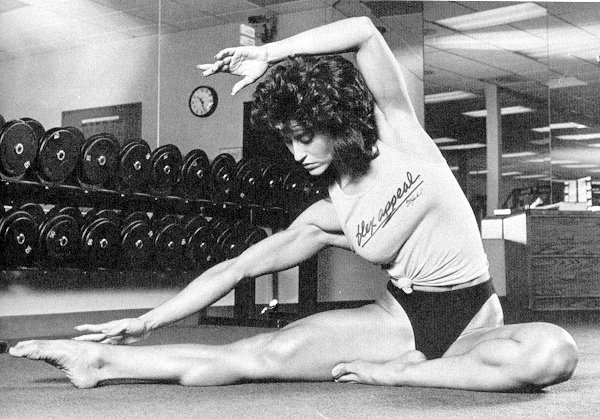
I think today, she would be almost considered perfect. Back then, most women recoiled in horror at her overly muscular physique! Click on her picture to see even more of this “unfeminine” woman (I always thought she was a true ideal)
Getting back to the point, with these two men as the inspiration, Americans started going to the gym in increasing numbers and lifted weights. Around this time another pioneer, Dr. Kenneth Cooper (Cooper Aerobics Center)of the US Air force published studies he did on servicemen showing the benefits and importance of cardiovascular fitness. He is called the father of Aerobics, and in fact coined the term “Aerobics” in the first place. A number of books by runners came out and the running boom began. This was all serious training. Logging long hours doing miles of running and hitting the gym to lift serious weights (subjective to the individual, of course) and this was work.
The problem was, most people don’t want to do hard physical work, and like any business, the fitness industry wanted to make more money, and that required more bodies in the gym. How do you make grueling, dedicated hard work fun?
Enter the age of recreational fitness, and STEP™ and Jazzercize™ were its first and second offspring. Originally, step was a very good workout, and very aerobic, as the choreography was simple and required very little skill to master. You made it harder by increasing the number of risers, and by moving faster. But slowly, creative impulses and waning attendance demanded change to keep the masses coming back. Choreography became more dance like (fun), more complicated, and required increasing levels of skill to perform without pause. Eventually, as much of the class time was spent watching and learning intricate choreography as actually moving vigorously. The class would be standing still the instructor breaking down the moves in slow motion, then having the class perform the single move back repeatedly, then learning another step, and so on, as if they were getting ready to put on a dance show. Half the hour is spent doing nothing physical at all, and steps had to be much lower to perform the complicated choreography.
Moving forward in time, athletes and their coaches started realizing that being physically stronger enhanced just about every athletic endeavor, and they slowly but surely incorporated traditional strength training into all their routines. Even the best swimmers now spend hours every week lifting weights to get physically stronger.
Meanwhile, in the consumer health club, men were dropping out of organized group fitness classes faster than raindrops fall during a tropical storm, and everyone who remained noticed they weren’t losing weight anymore. The public, looking at their athletic heroes, noticed how hard the athletes bodies looked and concluded it was all that athletic training that the athletes did, and group exercise classes got a second wind. Members started participating in all kinds of sports conditioning type classes; boxing, kickboxing, cardio kick boxing, sports conditioning, yoga, ballet workouts, P90X™, Crossfit™, TRX™; while the athletes themselves spent ever greater time lifting boring old weights. Click on either Crossfit or P90X above to read a journal article about the research, but here’s the conclusion of the study:
“In summary, though ECPs (extreme conditioning programs) such as CrossFit and P90X are very popular, this popularity does not appear to be warranted. There is little evidence from peer-reviewed studies that ECPs are safe and/or effective, particularly when compared to established training programs documented to improve military task performance. Though much more research needs to be conducted, ECPs do not seem, at this time, to represent training programs likely to improve military readiness.” by Guy Leahy, Med, CSCS,*D
Club members aren’t looking any fitter, by and large, but are, according to the Journal of Strength and Conditioning and the Journal of the American Medical Association dealing much higher frequencies of exercise related injuries. Athletic Performance has nothing to do with health, and everything to do with winning at all costs. Is this your goal? Is this important to you? Have you even thought about it?
Ask yourself why you go to the gym. Is it to get healthy, fit and strong, and to improve your appearance? Is it to improve your athletic performance in competitive or recreational sports? Is it recreational for you, in and of itself? All are valid, as far as I’m concerned, but you must be willing to match your reason to your method.
In conclusion,
If you’re trying to get healthy, fit, and strong to improve the quality of your life, be careful about’ training athletically! You will get hurt. Repeatedly. and 10, 15, or 20 years later you will feel every one of those injuries for the rest of your days. If you’re training because you’re a recreational or competitive athlete, make sure you pick a training style that transfers well to your sport of choice, and lift weights to enhance your physical abilities and reduce your risk of injury because you have a strong musculoskeletal foundation that can better withstand the stresses of athletics. If going to the gym is, in fact, your favorite form of recreation and entertainment, in and of itself, make sure you have a daily plan that minimizes your risk of injury so that you can continue for the long-term. Overtraining and improper form from overly complicated skill drills will have you convalescing at home far to frequently otherwise.
Share this:

NYTimes.com: Why Women Can’t Do Pull-Ups
This is one of the good articles. It’s actually accurate. I myself have helped train 5 women over 28 years to be able to perform a pull up. Sadly, that’s a statistic I’m proud of, since I know the extreme disadvantages women have in upper body strength. Anyway, read and enjoy.
 |
|
|||||||||||||||||||


Share this:

NSCA
What is the best possible protein supplement, who needs to take it, and when?
Any athlete, or those training like one, aught to ingest extra protein about 30 minutes after training, and it should come from whole foods, in a low fat, ratio of 4/1 carbohydrate/protein. The perfect post exercise recovery drink as it turns out is most likely low fat chocolate milk!
Cows milk contains 8 grams of protein and 12 grams of sugar (in the form of lactose), And 8 grams of fat, per serving (1 cup). The protein is a mix of two main types: whey protein (20%) and casein protein (80%). The chocolate syrup provides another 15-20 grams of sugar. I’m going to discuss the difference in those proteins, then get into carbohydrates, and nutrition in general.
As the article states, whey is a “fast acting” protein that is quickly absorbed into the blood stream for use by the body, while casein takes a little longer to be digested and used. Post exercise, this naturally occurring combo in milk provides the best option for immediate and overnight recovery.
But how much? All protein, when separated from its original source regardless of its chemical composition, works out to 4 calories per gram. Fish protein=4 calories. Steak protein=4 calories. Milk protein and peanut butter protein and soy protein; all 4 calories/gram. Depending on what you do in terms of exercise, an adult diet should consist of 20-30% protein.
An adult sedentary male should eat around 2000 calories a day to maintain a healthy weight. 20% protein would = 400 calories of protein; or 100 grams of protein per day. That 400 calories leaves this imaginary person with 1600 calories left to eat. 1600 calories that must come from carbohydrates and fat, the only other sources of calories a person can eat.
A carbohydrate is anything that can be turned into glucose easily during digestion. This includes sugar (in all its forms from refined table sugar to honey, agave, molasses, maple syrup, etc) to grains, fruits, and vegetables. Now, like protein, some sugars are fast acting (digest rapidly) and others less fast acting (digest relatively slower). This is not a value judgement on good and bad anymore than it was with the proteins. It’s a question of proper timing on your part. Fast digesting sugars help energize the body in the moment, and can aid in recovery immediately after exercise, while slower digesting carbs can help the body recover quickly, stay active over the long day, and continue to recover during sleep. That’s why chocolate milk is such a good post exercise recovery drink. The sugars and whey help with immediate recovery while the casein and the (low) fat content help with the longer term recovery.
All carbs are 4 calories/gram when separated from their parent source. Carbs from sugar, carbs from lettuce. Carbs from yellow peppers, potatoes, or rice, are all 4 calories. And 40-60% of imaginary mans 2000 calories per day should come from carbohydrates. Because our mystery man wants to eat as low fat a diet as possible like most health conscious people (though not me), lets say 60% carbs out of
the remaining 1600 calories for the day. thats 960 calories or 240grams of carbs.
That means our sedentary male has consumed 1360 calories from protein and carbs. 640 calories to go! But where can we get them?
Fat. Fat is a dense energy source containing 9 calories/gram. A calorie is simply a measure of energy, so 1 gram of fat has a drop more than twice the calorie (energy) of either protein or carbohydrate. All fats are comparatively slow to digest, and can aid in long term recovery (overnight) if properly timed during a day with exercise. You realize that there are “good” fats like fish and olive oil (unsaturated) and “bad” fats like those found in red meat (saturated). But regardless of whether a fat is “good” or “bad” (a different argument and blog post on that controversy) they are all 9 calories/gram. That means the remainder of this persons calories must come from fat; 71 grams of fat for the day to be precise; to get to a healthy calorie total. This person might tweak the carbs and protein up a bit to cut down the fat content, but either way, it’s a 2 for 1 exchange. He must add two grams of either protein or carbs for every 1 of fat he cuts. And there are definite downsides to that, as well.
There are nutritional exceptions: water and alcoholic drinks. Water has 0 calories, while alcoholic drinks are like super carbs, and possess 7 calories per gram (a chemical change that takes place during fermentation). So every serving of beer, wine, brandy, or scotch requires a reduction of calories. Two servings of carbs or proteins for every 1 serving of alcohol, or about an even exchange of fat for alcohol. The problem with alcohol is the more you drink, the less you’ll pay attention to making smart eating decisions!
The link below talks about protein supplements for athletic recovery, but lacks the context for the layman that I’ve sought to provide above.
http://nsca.com/Education/E-learning/Whey-Protein-vs–Casein-Protein-and-Optimal-Recovery/
“ Talent hits a target no one else can hit; Genius hits a target no one else can see. ” – Arthur Schopenhauer
Share this:
High-Intensity Regimens and Older Exercisers – NYTimes.com
Thanks to reader Thane, again, for bringing a great piece to my attention (and yours, by extension).
Kudos to the NYT. As seems to be their pattern, they publish an outstanding piece following an embarrassingly bad one.
Below is a really GOOD article published in the NYT about the benefits of high intensity training (with some caveats) for older adults; 60+ years old up to 75! The same advice could be given to just about anyone, at any age. Intensity is king when it comes to physical training. And high intensity is relative to the current condition, and age, of the trainor. In other words, stop futzing around. Click the link below
“ Talent hits a target no one else can hit; Genius hits a target no one else can see. ” – Arthur Schopenhauer
Share this:
Why I eat Organic
Sometimes, I truly hate the New York Times. Their tag line runs the heading: “All the news that’s fit to print”. I wonder how many people today know the source of that tag line. I sometimes wonder if the editors remember the source of it. Let me tell you, in case you don’t know. Back in the 1890’s competing newspapers were more concerned with sensational headlines to move sales, and they weren’t above making stories up, or blowing small stories up into national epics by exaggerating it out of all proportion (think about news organizations that continue to publish stories about “birthers”).
The Times would stand above all that and it’s reputation for integrity has allowed it to become the 3rd most widely read newspaper in the nation, and the only local newspaper with a national following (USA Today and the Wall Street Journal are 1 & 2, respectively) and garner 108 Pulitzer prizes in its history; more than any other news organization in the world; an award created by a rival newspaperman, but judged by a panel of national writers.
Unfortunately, this “newspaper of record” has experienced steadily declining readership (as have all print newspapers), and feels the need to print things, I’m guessing, that create a bit of sexy controversy.
The NYT recently published the results of a Stanford university study that cast doubt on the value of organic fruits and vegetables compared to non organic. They compared three vitamins; A, C, and E, and concluded their was no statistical difference in the content. The Times offered the conclusions of this one study; with out of context quotes by the lead researcher; and no other analysis. There was no discussion of method, other studies, why only those three micronutrients were compared, or any of the other reasons someone might choose to eat organic, that have nothing to do with nutrition yet still profoundly affect health.
How many of you actually knew that? My point is, if the story didn’t merit a full examination in the print edition, it was not worth publishing at all. It merely confuses and muddies the thoughts of a public already too overwhelmed with information overload to follow-up with further investigation on their own, and that’s why they purchase The New York Times in the first place!
Here’s my take.

 Some people eat organic foods under the erroneous belief that they automatically are getting more nutritious products. There are dozens of factors affecting the micronutrients content of produce that it’s very difficult to compare. The soil it was grown in, the water used to irrigate, and the ripeness when it was picked all affect the nutritional content. So if I can’t be sure my organic produce is more nutritious, why spend the extra money? Well, I know what won’t be in my organic produce: poison. Pesticides are poison. Skull and crossbones poison.
  Dont believe me? Go to your local home and garden section at Home Depot and look at the warning labels on any pesticide you find. Poison. Plain and simple. Imagine seeing this warning on produce at the market: “this produce has been repeatedly sprayed with deadly poisons”. See what they tell you to do in case of accidental ingestion of pesticides.
Multiple studies have shown that Pregnant women who consume the most pesticide laden diets give birth to children whose elementary school I.Q.’s are 4-7% lower than average. Childhood cancers, autism, learning deficiencies of all kinds, MS, MD, and a host of other once rare disorders are becoming all too common in our society, and the constant ingestion of *poison* would seem to be a logical place to start looking. But instead, the popular myth that childhood vaccinations, which save 100’s of millions of lives every year ( there is actually a historical record, you know), is somehow the cause of every childhood disease and disability, while the **poisons they ingest daily** somehow remain free of blame or even suspicion.
When “mad cow” disease swept Europe, livestock farmers who used organic feed were unaffected. No cattle on organic farms had to be destroyed, while upwards of 80% of all the other livestock around the continent had to be destroyed because of the infection. Read this if you want to learn more on this: Click
Other reasons I eat organic is because organically grown produce doesn’t last as long. It tends to be locally grown and locally sold. In other words, I’m supporting the local economy; the farmer next door, who’s making an extra effort, at considerable expense in time and money. And by the way, the local can buy personal training sessions with me if they are earning a good living, the farmer in Idaho can’t support me at all.
There are concerns with organic farming when looking beyond the local and personal level. Repeated studies have shown that organic farming techniques produce significantly lower crop yields compared to modern industrial farming. With 7 Billion people in the world, is it possible to feed everyone organically? I have my doubts, and I’m not about to start saying we should allow 50% of the world population to die of starvation. Starving today or possibly getting a deadly cancer in 20 years isn’t a hard choice to make if you’re the starving person or the parent of a starving child. Click this sentence to be taken to a great article in Scientific America. My advice, on a personal level, is anyone who can afford to eat organically should do so, as much as possible, without becoming sanctimonious. Then we should be encouraging agricultural scientific research to produce safer, better approaches for industrial farming to make food, and the environment, safer.

C’mon NYT’s. We have so few reliable media sources left. You charge 100% more per edition than any other local daily. If we buy your paper at that price, don’t we deserve the whole story and all the details, too.
“ Talent hits a target no one else can hit; Genius hits a target no one else can see. ” – Arthur Schopenhauer
Share this:

Subtracting Calories May Not Add Years To Life
YOU AND I ARE NOT IMMORTAL. There. I said it. Was I not clear enough? Try this: YOU AND I ARE GOING TO DIE SOMETIME BEFORE OUR 120TH BIRTHDAY.
Morbid? No. I choose to live in the real world. Our life spans are mostly determined by our genetics. We’ve all known or heard the stories about someone who smoked 5 packs a day of unfiltered cigarettes and lived to 90, and died of completely unrelated causes. No matter how you may want to deny this biological truth, the fact is that modern neuroscience, combined with biology and organic chemistry, are showing that our lives, thoughts, and even choices, are mostly in the hands of factors completely out of our control. We can, at best, be aware of what we are doing as we start doing it, and try to be reflective on the likely outcomes. In that way, we might be able to modify what we’ve started doing, and change course if we think the outcome will be bad. For more on this point, I highly recommend this book: FREE WILL, by Sam Harris. Sam Harris has a degree in Philosophy from Stanford University, and a PhD in neuroscience from UCLA. For more information about Sam Harris and his work, click on his name.
What you can do is focus on improving the quality of whatever life you will have, as opposed to desperately trying to prolong it at all costs. Exercise to ensure that you have energy and vitality and strength to meet life’s challenges at all stages of your life and be able to both take care of yourself for as long as possible, and enjoy yourself, for as long as possible. What I’m afraid of is the loss of my physical independence; of becoming so frail and weak that i can’t take care of myself or play with my grandchildren, or walk a dog. My grandfather Max died in 1975, almost 90 years old. He wasn’t rich. He lived in a small, one bedroom apartment that he moved into after his wife died. And he had a girlfriend 30 years his junior. He died in his bed, (not that way…) but lived his last day as an independent, self-sufficient individual. That’s the way to live, and that’s how I want my last day to be.
This brings me to the article linked below. It is a follow-up to a decades older research study that has entered the popular consciousness. That study found evidence that when rats were fed extremely low-calorie diets, their average lifespan increased by 15-30%. It was merely the first study published trying to determine the effect of caloric intake on lifespan. Some people, privileging the purpose of life with longevity, have slavishly tried to extrapolate that rat study to their own lives, believing that their lifespan would be similar extended. Not too many people, mind you, because to emulate the calorie count for adult human weight would allow you to consume 600-800 calories per day. As a point of reference, that’s the same caloric allotment German Nazi’s allowed the Jews in concentration camps; the idea being to slowly starve them to death while allowing them to perform some forced labor until they became too uselessly weak. You should know what happened next.
The very idea that a starvation diet would allow you to improve your odds of living longer is so blatantly counter intuitive that it should have set up severe warning signals in everyone who read this study. But the press reported it with conviction, hailing it as a potential major breakthrough, and the public who read it took to this snake oil promise of longer life with fervor, even if they couldn’t abide by the strict caloric requirements.
Now comes this study, using our closest relatives, and it refutes the findings of the older study, at least to the efficaciousness for humans. Read the last paragraph. Study and memorize the last paragraph. Embed and imprint the last paragraph into your brain stem. There is 100 years of research, tried and tested and found valid, in that last paragraph. Then go and do something fun and exciting.
I found the following story on the NPR iPhone App:
Subtracting Calories May Not Add Years To Life by Nell Greenfieldboyce
NPR – August 30, 2012
Scientists have known for decades that lab rats and mice will live far longer than normal if they’re fed a super-low-calorie diet, and that’s led some people to eat a near-starvation diet in the hopes that it will extend the human life span, too….
“ Talent hits a target no one else can hit; Genius hits a target no one else can see. ” – Arthur Schopenhauer
Share this:
The Shoulder
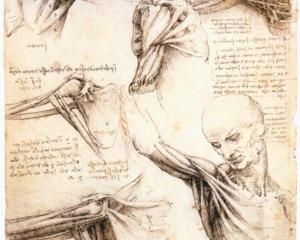
There is something special about shoulders, that place them almost on par with breasts and butts for women, and pecs and biceps, for men. How we define nice shoulders may vary from person to person, but when you get down to it, it’s only a discussion of degrees. Shapely defined shoulders are attractive to most everyone, on everyone. It’s even a recurring female fashion trend to add shoulder padding in blouses and blazers.
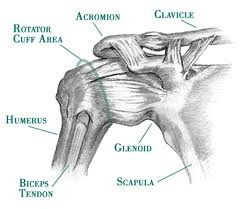
Some interesting facts about the shoulder. It is the most mobile joint in the the human body, able to move the most degrees in ever single plane of motion. The “shoulder girdle” is involved in almost every possible torso exercise. This creates the opportunity for a great variety of possible exercises, but this comes with increased ***joint laxity***, compared to your other joints, creating greater risk of injury do to accidental hyperextension leading to muscular and connective tissue damage. The fact of its extreme mobility puts it at the most risk of accidental injury, and it’s necessary involvement in all torso exercises put it at risk of over use injuries.
Click this for a detailed overview of the shoulder joint: shoulder anatomy, in detail
The number of possible shoulder exercises/movements can be overwhelming, and trying to do every possible variation in every possible movement pattern would be an all day, monotonous, and dangerous, mess.
Here’s a rundown of the most frequently used shoulder exercises seen in a typical health club:
1. Dumbbell Military Press (standing)
2. Dumbbell Seated shoulder press
3. Dumbbell Lateral raises
4. Dumbbell front raise
5. Dumbbell bent over reverse fly’s
6. Barbell Military Press (standing)
7. Smith machine seated shoulder press
8. Nautilus (or other manufacturer) shoulder press machine
9. Nautilus (or other) lateral raise machine
10. Pec Fly/**rear delt** machine
11. Cable front raise
12. Cable lateral raise
13. Cable rear deltoid
14. Cable overhead press
You can look all these up on the invaluable website:
ExRx.net
And these are just the most common ones. I could probably expand this list for pages if I wanted, but I don’t want to and most of you don’t want me to, either. These are just deltoid specific exercises. Then there are all the other major muscle exercises of the torso that put tremendous stress of the deltoids. For example, all of the following chest exercises work the anterior (front) deltoid intensely:
*Push ups, Olympic bench press, dumbbell bench press, incline bench press, decline bench press, dumbbell pec fly, cable pec fly’s, machine pec fly*.
All of the next group work the posterior (rear) deltoids and other muscles of the back shoulder girdle:
*Pull ups, Lat pull downs, long pulls, dumbbell bent over rows, barbell rows, cable rows, machine rows (nautilus or other) *.
With so many exercises hitting anterior and posterior deltoids heavily, one aught to wonder why some exercisers insist on spending so much time on trying to target those areas specifically. For the vast majority of gym goers lifting weights, overhead presses and lateral raises are all that are needed to develop well shaped and strong shoulders, as all the other exercises you should be doing for your upper body are taking care of the other two regions of the deltoids.
Given the over importance shoulder training seems to take on with serious weight lifters of both sexes, it shouldn’t be surprising that shoulder pain is one of the three most frequently sited gym associated injuries (lower back and knees being the other two).
If you’re not a competitive bodybuilder, or someone who wants to look like one, my advice is to cut down on shoulder training, and focus on lateral raise and/or shoulder press, while making sure that your chest (pushing exercise=anterior deltoid) and back (pulling exercises=posterior deltoid) exercises are truly challenging.
Of course, always follow strict good form. The first really bad rep performed should be the last rep of the set.
Happy training.
Share this:

Weight training for youths
Knowledge is a never ending pursuit. Knowledge is constantly evolving, growing, and often changing our outlook in revelatory ways. Change is the nature of the honest intellectual.
The pursuit of intellectual integrity demands that the pursuer keep an open, but skeptical, mind, and when better evidence and new facts emerge, re-evaluation and change must follow.
This is a strength. Science is always looking at reality, and whenever a flaw in an answer is exposed, it looks for a better answer, based on new evidence and better observation, as opposed to dogmatically insisting that the earth is, indeed, the center of the solar system and flat, with the sun and planets all revolving around it.
This isn’t indicative of mistake. Once upon a time illness was thought to be the fault of bad spirits; that’s why we say “bless you” when you sneeze. Eventually, the nascent medical profession in the 16th century started making some connections to environment and certain illnesses (evidence that was known in to ancient Egyptians and Greeks, Babylonians and Romans, the great dynasties of ancient China and the Hindu wiseman of the subcontinent, as well as those unfortunate wise women of the middle ages burned at the stake for “witchcraft”). We now know better. We understand the role of bacteria,virus, environment, and genetics in human health, so our approach in treatment changed. Gradually. Some approaches were wrong and later corrected. Some were ahead of their time. Vaccination was used in the later 18th century during the American revolution with some success and very high risk. This led to further study, further experimentation, further refinement. Today, it’s unlikely that any reader of this post knows anyone with polio. If we lived in a faith determined world we’d still be trying to pray the flu away and dying in the millions instead of it being a moderate inconvenience (it was the deadliest persistent disease in human history until the discovery of bacterial causes and antibiotics).
So where is all this high minded exposition going? The New York Times has printed a new health article on the importance of weight lifting for children.
My friend and reader Thane pointed me towards this article: in the NY Times about weight training for youths.
Until 20 years ago, everyone outside of a few researchers considers this harmful and dangerous. For the last 10 years the published evidence has been mounting to the contrary. I found that evidence compelling and philosophically sound, but would have still cautioned against it as the preponderance of opinion still was strongly opposed. 5 years ago the debate was 50/50, but the trend was clear. No new evidence supporting the dangers of proper weight training for children emerged, while evidence of its being beneficial continued to accrue.
Perhaps this information will start filtering into the mainstream, and we can start teaching our children healthy habits earlier, to take into their adult lives, without dogmatic falsehoods holding them back.
Share this:
Creatine Side Effects: The Truth About Creatine Bloating, Creatine Diarrhea & other Dangers of Creatine | Nick Tumminello Hybrid Strength Training & Conditioning | Ft.Lauderdale Personal Trainer | Sports Performance & Bodybuilding
Sports Nutrition is such a murky mess. If there is any one area related to fitness that is almost hopelessly mired in superstition, lies, half-truths, and misinformation, it is sports nutrition. It’s not surprising. There are so many magazines and supposed experts, and mis-informed medical personnel who believe they are experts, but have never done any actual research, and have not really read a preponderance of the research, before making up their minds. To many in the medical community, the whole idea of strength training is anathema! Back in the 1940’s there was a study that showed that strength training enlarged the heart, which was associated with increased risk of heart disease. It was also seen as a socially marginal and suspect activity; practitioners were usually assumed to be homosexual, at a time when that label was many factors more prejudicial than they are today.
The simple fact is, there have been few supplements as exhaustively researched as creatine monohydrate, and no legitimate peer reviewed research (hundreds of them) have ever shown any negative side effects of statistical significance. What’s especially infuriating is when you read an actual research study that concludes it is extremely safe, and then the authors of the study still insist on including warnings of possible negative side effects that the study they just published refuted. Thats how hard preconceived beliefs, biases, and prejudices can be, to overcome.
What creatine supplementation will do for the vast majority of users is the following:
- Increase lean muscle mass
- Increase in body weight (due to increase muscle mass)
- Increase muscular strength
- Increased recovery times during and post workout
- Increase in anaerobic endurance (more reps)
Anyone interested in increased strength, increased muscular development, and power output should probably supplement if their diet does not include foods naturally rich in creatine. Creatine is stored,; and consequently found; in muscle. Beef and fish contain the highest concentrations, but the more processed and cooked, the less creatine will be available for human absorption.
The human body is capable of storing approximately 5-10 grams of creatine at any given time, and we naturally produce about 2 grams from our own internal resources. To fully saturate our cells we need to make up the difference with diet and/or supplementation.
Aerobic endurance athletes will see less benefit from creatine supplementation as creatine is primarily a source of anaerobic energy. Likewise, aerobic athletes often benefit from being light weight, and creatine can cause actual weight gain from the increased muscle mass. this needs to be factored into an aerobic athletes decision whether to supplement or not. It should be noted, though, that even with supplementation, weight and strength gains will be non-existent to minimal if not accompanied by a program of rigorous strength training. There is no such thing as magic.
Below are links to a true expert who performs and reviews real research on the subject. An educated exerciser gets results.
(Via.)
 Fitnessgroan's Blog