Why I eat Organic

Sometimes, I truly hate the New York Times. Their tag line runs the heading: “All the news that’s fit to print”. I wonder how many people today know the source of that tag line. I sometimes wonder if the editors remember the source of it. Let me tell you, in case you don’t know. Back in the 1890’s competing newspapers were more concerned with sensational headlines to move sales, and they weren’t above making stories up, or blowing small stories up into national epics by exaggerating it out of all proportion (think about news organizations that continue to publish stories about “birthers”).

The Times would stand above all that and it’s reputation for integrity has allowed it to become the 3rd most widely read newspaper in the nation, and the only local newspaper with a national following (USA Today and the Wall Street Journal are 1 & 2, respectively) and garner 108 Pulitzer prizes in its history; more than any other news organization in the world; an award created by a rival newspaperman, but judged by a panel of national writers.

Unfortunately, this “newspaper of record” has experienced steadily declining readership (as have all print newspapers), and feels the need to print things, I’m guessing, that create a bit of sexy controversy.

The NYT recently published the results of a Stanford university study that cast doubt on the value of organic fruits and vegetables compared to non organic. They compared three vitamins; A, C, and E, and concluded their was no statistical difference in the content. The Times offered the conclusions of this one study; with out of context quotes by the lead researcher; and no other analysis. There was no discussion of method, other studies, why only those three micronutrients were compared, or any of the other reasons someone might choose to eat organic, that have nothing to do with nutrition yet still profoundly affect health.

To be fair, the NY Times did follow up on their “Well” blog and did a much better job of going into the details and nitty-gritty (click this sentence).

How many of you actually knew that? My point is, if the story didn’t merit a full examination in the print edition, it was not worth publishing at all. It merely confuses and muddies the thoughts of a public already too overwhelmed with information overload to follow-up with further investigation on their own,  and that’s why they purchase The New York Times in the first place!

Here’s my take.Some people eat organic foods under the erroneous belief that they automatically are getting more nutritious products. There are dozens of factors affecting the micronutrients content of produce that it’s very difficult to compare. The soil it was grown in, the water used to irrigate, and the ripeness when it was picked all affect the nutritional content. So if I can’t be sure my organic produce is more nutritious, why spend the extra money? Well, I know what won’t be in my organic produce: poison. Pesticides are poison. Skull and crossbones poison. Dont believe me? Go to your local home and garden section at Home Depot and look at the warning labels on any pesticide you find. Poison. Plain and simple. Imagine seeing this warning on produce at the market: “this produce has been repeatedly sprayed with deadly poisons”. See what they tell you to do in case of accidental ingestion of pesticides.

Multiple studies have shown that Pregnant women who consume the most pesticide laden diets give birth to children whose elementary school I.Q.’s are 4-7% lower than average. Childhood cancers, autism, learning deficiencies of all kinds, MS, MD, and a host of other once rare disorders are becoming all too common in our society, and the constant ingestion of *poison* would seem to be a logical place to start looking. But instead, the popular myth that childhood vaccinations, which save 100’s of millions of lives every year ( there is actually a historical record, you know), is somehow the cause of every childhood disease and disability, while the **poisons they ingest daily** somehow remain free of blame or even suspicion.

When “mad cow” disease swept Europe, livestock farmers who used organic feed were unaffected. No cattle on organic farms had to be destroyed, while upwards of 80% of all the other livestock around the continent had to be destroyed because of the infection.  Read this if you want to learn more on this:  Click

Other reasons I eat organic is because organically grown produce doesn’t last as long. It tends to be locally grown and locally sold. In other words, I’m supporting the local economy; the farmer next door, who’s making an extra effort, at considerable expense in time and money. And by the way, the local can buy personal training sessions with me if they are earning a good living, the farmer in Idaho can’t support me at all.

There are concerns with organic farming when looking beyond the local and personal level.  Repeated studies have shown that organic farming techniques produce significantly lower crop yields compared to modern industrial farming.  With 7 Billion people in the world, is it possible to feed everyone organically?  I have my doubts, and I’m not about to start saying we should allow 50% of the world population to die of starvation.  Starving today or possibly getting a deadly cancer in 20 years isn’t a hard choice to make if you’re the starving person or the parent of a starving child.  Click this sentence to be taken to a great article in Scientific America.  My advice, on a personal level, is anyone who can afford to eat organically should do so, as much as possible, without becoming sanctimonious.  Then we should be encouraging agricultural scientific research to produce safer, better approaches for industrial farming to make food, and the environment, safer.

C’mon NYT’s. We have so few reliable media sources left. You charge 100% more per edition than any other local daily. If we buy your paper at that price, don’t we deserve the whole story and all the details, too.

“ Talent hits a target no one else can hit; Genius hits a target no one else can see. ” – Arthur Schopenhauer

Subtracting Calories May Not Add Years To Life

YOU AND I ARE NOT IMMORTAL.  There.  I said it.  Was I not clear enough?  Try this: YOU AND I ARE GOING TO DIE SOMETIME BEFORE OUR 120TH BIRTHDAY.  

Morbid?  No.  I choose to live in the real world.  Our life spans are mostly determined by our genetics.  We’ve all known or heard the stories about someone who smoked 5 packs a day of unfiltered cigarettes and lived to 90, and died of completely unrelated causes.  No matter how you may want to deny this biological truth, the fact is that modern neuroscience, combined with biology and organic chemistry, are showing that our lives, thoughts, and even choices, are mostly in the hands of factors completely out of our control.  We can, at best, be aware of what we are doing as we start doing it, and try to be reflective on the likely outcomes.  In that way, we might be able to modify what we’ve started doing, and change course if we think the outcome will be bad.  For more on this point, I highly recommend this book: FREE WILL, by Sam Harris.  Sam Harris has a degree in Philosophy from Stanford University, and a PhD in neuroscience from UCLA.  For more information about Sam Harris and his work, click on his name.

What you can do is focus on improving the quality of whatever life you will have, as opposed to desperately trying to prolong it at all costs.  Exercise to ensure that you have energy and vitality and strength to meet life’s challenges at all stages of your life and be able to both take care of yourself for as long as possible, and enjoy yourself, for as long as possible.  What I’m afraid of is the loss of my physical independence; of becoming so frail and weak that i can’t take care of myself or play with my grandchildren, or walk a dog.  My grandfather Max died in 1975, almost 90 years old.  He wasn’t rich.  He lived in a small, one bedroom apartment that he moved into after his wife died.  And he had a girlfriend 30 years his junior.  He died in his bed, (not that way…) but lived his last day as an independent, self-sufficient individual.  That’s the way to live, and that’s how I want my last day to be.

This brings me to the article linked below.  It is a follow-up to a decades older research study that has entered the popular consciousness.  That study found evidence that when rats were fed extremely low-calorie diets, their average lifespan increased by 15-30%.  It was merely the first study published trying to determine the effect of caloric intake on lifespan.  Some people, privileging the purpose of life with longevity, have slavishly tried to extrapolate that rat study to their own lives, believing that their lifespan would be similar extended.  Not too many people, mind you, because to emulate the calorie count for adult human weight would allow you to consume 600-800 calories per day.  As a point of reference, that’s the same caloric allotment German Nazi’s allowed the Jews in concentration camps; the idea being to slowly starve them to death while allowing them to perform some forced labor until they became too uselessly weak.  You should know what happened next.

The very idea that a starvation diet would allow you to improve your odds of living longer is so blatantly counter intuitive that it should have set up severe warning signals in everyone who read this study.  But the press reported it with conviction, hailing it as a potential major breakthrough, and the public who read it took to this snake oil promise of longer life with fervor, even if they couldn’t abide by the strict caloric requirements.

Now comes this study, using our closest relatives, and it refutes the findings of the older study, at least to the efficaciousness for humans.  Read the last paragraph.  Study and memorize the last paragraph.  Embed and imprint the last paragraph into your brain stem.  There is 100 years of research, tried and tested and found valid, in that last paragraph.  Then go and do something fun and exciting.

I found the following story on the NPR iPhone App:

Subtracting Calories May Not Add Years To Life by Nell Greenfieldboyce

NPR – August 30, 2012

Scientists have known for decades that lab rats and mice will live far longer than normal if they’re fed a super-low-calorie diet, and that’s led some people to eat a near-starvation diet in the hopes that it will extend the human life span, too….

http://www.npr.org/blogs/thesalt/2012/08/30/160266307/subtracting-calories-may-not-add-years-to-life?sc=17&f=1001

“ Talent hits a target no one else can hit; Genius hits a target no one else can see. ” – Arthur Schopenhauer
The Shoulder

20120729-193553.jpg

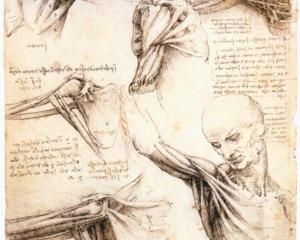
There is something special about shoulders, that place them almost on par with breasts and butts for women, and pecs and biceps, for men. How we define nice shoulders may vary from person to person, but when you get down to it, it’s only a discussion of degrees. Shapely defined shoulders are attractive to most everyone, on everyone. It’s even a recurring female fashion trend to add shoulder padding in blouses and blazers.

20120729-194418.jpg

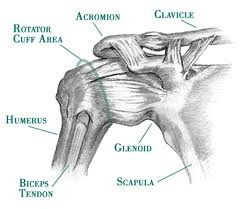
Some interesting facts about the shoulder. It is the most mobile joint in the the human body, able to move the most degrees in ever single plane of motion. The “shoulder girdle” is involved in almost every possible torso exercise. This creates the opportunity for a great variety of possible exercises, but this comes with increased ***joint laxity***, compared to your other joints, creating greater risk of injury do to accidental hyperextension leading to muscular and connective tissue damage. The fact of its extreme mobility puts it at the most risk of accidental injury, and it’s necessary involvement in all torso exercises put it at risk of over use injuries.
Click this for a detailed overview of the shoulder joint: shoulder anatomy, in detail

The number of possible shoulder exercises/movements can be overwhelming, and trying to do every possible variation in every possible movement pattern would be an all day, monotonous, and dangerous, mess.

Here’s a rundown of the most frequently used shoulder exercises seen in a typical health club:

1. Dumbbell Military Press (standing)
2. Dumbbell Seated shoulder press
3. Dumbbell Lateral raises
4. Dumbbell front raise
5. Dumbbell bent over reverse fly’s
6. Barbell Military Press (standing)
7. Smith machine seated shoulder press
8. Nautilus (or other manufacturer) shoulder press machine
9. Nautilus (or other) lateral raise machine
10. Pec Fly/**rear delt** machine
11. Cable front raise
12. Cable lateral raise
13. Cable rear deltoid
14. Cable overhead press
You can look all these up on the invaluable website:
ExRx.net

And these are just the most common ones. I could probably expand this list for pages if I wanted, but I don’t want to and most of you don’t want me to, either. These are just deltoid specific exercises. Then there are all the other major muscle exercises of the torso that put tremendous stress of the deltoids. For example, all of the following chest exercises work the anterior (front) deltoid intensely:
*Push ups, Olympic bench press, dumbbell bench press, incline bench press, decline bench press, dumbbell pec fly, cable pec fly’s, machine pec fly*.

All of the next group work the posterior (rear) deltoids and other muscles of the back shoulder girdle:

*Pull ups, Lat pull downs, long pulls, dumbbell bent over rows, barbell rows, cable rows, machine rows (nautilus or other) *.

With so many exercises hitting anterior and posterior deltoids heavily, one aught to wonder why some exercisers insist on spending so much time on trying to target those areas specifically. For the vast majority of gym goers lifting weights, overhead presses and lateral raises are all that are needed to develop well shaped and strong shoulders, as all the other exercises you should be doing for your upper body are taking care of the other two regions of the deltoids.

Given the over importance shoulder training seems to take on with serious weight lifters of both sexes, it shouldn’t be surprising that shoulder pain is one of the three most frequently sited gym associated injuries (lower back and knees being the other two).

If you’re not a competitive bodybuilder, or someone who wants to look like one, my advice is to cut down on shoulder training, and focus on lateral raise and/or shoulder press, while making sure that your chest (pushing exercise=anterior deltoid) and back (pulling exercises=posterior deltoid) exercises are truly challenging.

Of course, always follow strict good form. The first really bad rep performed should be the last rep of the set.

Happy training.

Weight training for youths

Knowledge is a never ending pursuit. Knowledge is constantly evolving, growing, and often changing our outlook in revelatory ways. Change is the nature of the honest intellectual.

The pursuit of intellectual integrity demands that the pursuer keep an open, but skeptical, mind, and when better evidence and new facts emerge, re-evaluation and change must follow.

This is a strength. Science is always looking at reality, and whenever a flaw in an answer is exposed, it looks for a better answer, based on new evidence and better observation, as opposed to dogmatically insisting that the earth is, indeed, the center of the solar system and flat, with the sun and planets all revolving around it.

This isn’t indicative of mistake. Once upon a time illness was thought to be the fault of bad spirits; that’s why we say “bless you” when you sneeze. Eventually, the nascent medical profession in the 16th century started making some connections to environment and certain illnesses (evidence that was known in to ancient Egyptians and Greeks, Babylonians and Romans, the great dynasties of ancient China and the Hindu wiseman of the subcontinent, as well as those unfortunate wise women of the middle ages burned at the stake for “witchcraft”). We now know better. We understand the role of bacteria,virus, environment, and genetics in human health, so our approach in treatment changed. Gradually. Some approaches were wrong and later corrected. Some were ahead of their time. Vaccination was used in the later 18th century during the American revolution with some success and very high risk. This led to further study, further experimentation, further refinement. Today, it’s unlikely that any reader of this post knows anyone with polio. If we lived in a faith determined world we’d still be trying to pray the flu away and dying in the millions instead of it being a moderate inconvenience (it was the deadliest persistent disease in human history until the discovery of bacterial causes and antibiotics).

So where is all this high minded exposition going? The New York Times has printed a new health article on the importance of weight lifting for children.

My friend and reader Thane pointed me towards this article: in the NY Times about weight training for youths.

Until 20 years ago, everyone outside of a few researchers considers this harmful and dangerous. For the last 10 years the published evidence has been mounting to the contrary. I found that evidence compelling and philosophically sound, but would have still cautioned against it as the preponderance of opinion still was strongly opposed. 5 years ago the debate was 50/50, but the trend was clear. No new evidence supporting the dangers of proper weight training for children emerged, while evidence of its being beneficial continued to accrue.
Perhaps this information will start filtering into the mainstream, and we can start teaching our children healthy habits earlier, to take into their adult lives, without dogmatic falsehoods holding them back.

BBC News – Inactivity ‘killing as many as smoking’

Inactivity is a truly silent killer.  Too many Americans, and others in the developed world, simply do not move enough to maintain minimal standards of health.  There are many culprits, and no doubt the easiest one pundits will blame is probably video games.  I take issue with that, however.  In the 19th century politicians and social critics railed against the evils of too  much reading; it will make you act out, unable to distinguish fantasy from reality, and make you lazy sitting around for hours every day.  In the 20th century it was television.  Now it’s video games.  Every new mode of entertainment frightens, distresses, and annoys those too old to understand it.  If it didn’t annoy the older generation, it probably wouldn’t be popular in the first place.  Regardless, these excuses don’t hold water.  Individuals can abuse anything, but the fact is we have created a society that does not privilege physical activity unless you happen to be physically gifted to begin with.  Gym is usually one of the first things eliminated from budget strapped schools, right after the arts, rather than raise taxes in order to be able to continue offering these vital programs.  No one wants their taxes raised, but then decry when their services are cut.  Why do so many of us insist on believing in the magical free ride?  Worried about corruption and waste?  Grow up!  it exists in every human endeavor.  It exists in your own homes ever time a husband or wife holds back a little extra from a paycheck, or a child keeps the change when the are sent out on an errand, or a freaking credit card is used for any reason!  If you can’t escape waste, fraud, and corruption in your own home, what magical world do you live in that allows you to believe it won’t exist in the public sector?  Get over it.  Put your money where it belongs, into the future for your children, and that future should include you living long and healthy enough to play with your grandchildren.

So now that I’ve given you my two cents, read this article published in the prestigious Lancet.

BBC News – Inactivity ‘killing as many as smoking’.

Work Out Posts

Everyone is looking for the magic routine or the magic exercise, as if there is some secret that will transform your body better, quicker, easier, than any other.  Sorry.   That doesn’t work.  People always assume that the advice they can get from some super trainer of celebrities is going to work better than they could get from their neighborhood gym trainer.  Uh-uh. The advice you get from any trainer is going to be the same crap shoot you’d get from any other trainer.  You have no way of knowing if the advice is good or bad unless you have good knowledge to know better yourself, and the average gym goer simply doesn’t.

This brings me to one of my personal issues with training blogs, in general. Most of the blog posts out there (and I subscribe to more than a few) seem to focus on describing killer routines or Best Butt Busting exercises (or any other body part you might want to develop).  They can’t all be the best, can they?  This is sensationalism at it’s most idiotic.There is no magic and there are no shortcuts.  There is knowledge and evidence based training, and there is bullshit.  Every exercise is a tool, but not every tool is appropriate for every job.

The problem I have with these posts is that there seems to be an assumption that the reader will understand how to do these workouts and exercises properly, and be able to integrate them into their existing workouts effectively.  Inevitably, someone writes in how following so and so’s advice led to a major knee, lower back or other musculoskeletal injury and that so and so doesn’t know what they’re talking about and is a horrible trainer.  Most of my readers are not fitness professionals or professional athletes, and I have no way of knowing if any specific advice I give will be followed properly, but I will be held responsible by that person if anything goes wrong.  It almost never seems to occur to these complainers that perhaps they did the exercises badly, or improperly implemented the advice.  All the same, I fault the Fitness expert writing for not properly qualifying their advice.  I also blame them for giving too much of this kind of advice.  Every other post seems to tout this or that exercise as the best for a specific muscle group, and the posts in-between talk about this or that routine as being the greatest.  As these bloggers and professional writers are far and away the most popular, I suppose I can’t totally condemn them.

That said, people still want to know:  what is the best exercise routine a person can follow for overall fitness?  So here it is, a routine that will absolutely get you in great shape if you do it fervently every other day till the day you die,  assuming you follow all the rules of intensity that I’ve laid out innumerable times and you are otherwise physically healthy with no major pre-existing injuries:

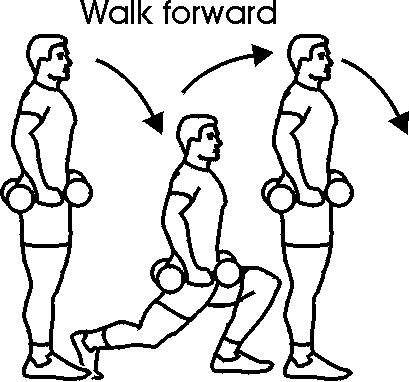
  1.  Walking Lunges with dumbbells: perform up to 7 sets, with rep ranges between 12 steps and 30 steps, so long as the last 3 steps of every set are exhausting.
  2. Pull ups/Lat Pulldowns: perform up to 7 sets, with rep ranges between 6 and 15 reps, making sure the last rep of every set is almost impossible to complete.

    A US Marine Doing Pull-ups.
    A US Marine Doing Pull-ups. (Photo credit: Wikipedia)
  3. Push Ups (toes or knees): perform up to 7 sets, as many reps as you can with good form on every set (even if it’s 50 reps on the 1st and 2 reps on the last).

    English: an exercise of chest
    English: an exercise of chest (Photo credit: Wikipedia)

Make sure you know how to do every exercise correctly, or get a trainer to show you.  Just doing these three exercises, in the routine I’ve laid out for you, is the most perfect and magical workout ever devised by mortal man.  Do this every other day, throw in cardio on in-between days.   Don’t forget to eat like a champion athlete and sleep like a 10-year-old, and you will get into unbelievably great shape practically overnight (ok, in 6-12 months).

The Intermediate Exercise Enthusiast

The intermediate exerciser has learned at least 3 of the 5 important things in order to progress to this level, and it shows. Most serious health club exercisers fall into this category, though my personal observation is that no more than 20% of gym members ever make it to this level, and instead remain novices despite the amount of time they spend in the gym going from one activity to another. The Intermediate Exerciserhas lost significant body fat and has gained some real muscle, either in the form of size and bulk or muscular definition, or both, depending on their goal. The 5 critical things that the intermediate exerciser understands and conforms to:

  1. Consistency
  2. Intensity
  3. broad knowledge of muscle function
  4. Nutrition
  5. Rest

Lets take these 5 in order.

  1. Consistency is just what it says. You are committed to your workouts and have a schedule you will not deviate from when possible. You have set aside a certain number of days; typically 4-6; and a set amount of time; typically 60-90 minutes; and you train. This isn’t something you try to fit into your day. It is one of your highest priorities that you work the rest of your day around. When doing cardiovascular/aerobic training you have a protocol you follow and stick to it. When weight lifting, you typically follow some version of a split routine for your body parts, the classic example being Chest/Shoulders/Triceps on day one, Back/Biceps on day two, and Lower Body on day three. Then repeating that pattern for a six-day workout with one day off for complete rest. You will stick to this pattern till doomsday comes or until you change goals. Additionally, you understand the importance of your exercise routine; variation is not your friend in this regard. You need to stick to a routine that you can make comparative assessments on. That means the same, or extremely similar, exercises for each body part every time you train that body part. If your goal is to be the best marathon runner you can be, you don’t spend hours a week ridding a lifecycle or taking spin classes; you run miles, period! If your goal is to improve your overall muscular strength, or build muscle, you pick your exercises and do them repetitively for months on end, the only variables being that you will continuously push yourself to lift heavier weights every week or even every workout!
  2. Intensity is all about understanding your goal. It is the most important factor that will determine whether you actually achieve any measurable progress, whether it’s increasing you distance on a bike ride, speed in the 400 meter run, or your 1 rep max doing an olympic bench press. Trying to lose weight requires a certain intensity. Building muscle requires its own level of intensity. Improving athletic performance…has its own special intensity demands. Not understanding what intensity you need to achieve will undermine everything you try to accomplish. Too much high intensity training will undermine a marathoner, and too little will be futile for the sprinter or weight lifter. If you haven’t read my posts on intensity, or want to refresh your memory click here and here.
  3. Broad knowledge of muscle function means you really understand how all the major skeletal muscles move and work, and know a pretty broad range of exercises for each of them. It’s like having a large vocabulary of exercises to draw on. Since you also understand how the muscles work, it allows you to choose complimentary exercises when doing multiples per body part. You understand why you might want to do pec flys after olympic bench press, not before, or why doing lat pull downs after pull ups might be redundant, so doing dumbbell rows is the better choice to follow-up with in most cases. (Yes, there might be a valid reason to do both pull ups and lat pull downs in the same workout, but that wouldn’t be the most common combo or even the norm). You understand which exercises will enhance your athletic activities or hinder them, and train accordingly.
  4. Nutrition is simply the understanding that what you consume is both the fuel that moves you and the building blocks of what your body is made of. The cliche´ “You are what you eat” is precisely true. Trying to build a powerful body on a diet of McDonald’s, Pepsi, and Twizzlers, is akin to building a battleship hull out of corroded iron. If you can’t get serious about what you eat, get out of the gym. I follow the 80/20 rule. I eat extremely healthful 80% of the time, and don’t worry about the other 20%. The less fit you start, the more dedicated yo have to be. If you’re very overweight and extremely unfit, you need to follow the 100% rule; all healthy, all the time. Period. Don’t cry about fairness, it won’t help. As a fuel, the foods you eat (solid and liquid) all have their specific purposes, and understanding them is critical. Even the most wholesome foods misused can have a counterproductive effect if not properly applied. Every serious endurance athlete understands the importance of carb loading; where you consume vast quantities of mostly simple carbohydrates like pasta the day before the big race. Serious marathoners are extremely lean, carrying minimal body fat (reserve energy stores) to breakdown as the miles accumulate into the high teens. So they manipulate their diets to maximize the available energy on race day. If you don’t run over 100 miles a week, don’t eat like a marathoner, cause you’ll get fatter than a walrus in a well stocked zoo. 20 years ago everyone said eat all the pasta you want because that’s what skinny marathoners eat, now we say avoid all pasta! Both are stupid statements. The question is: how will eating all this pasta help me in my life’s pursuits! If it won’t, don’t eat so much. The strength athlete eats large amounts of protein because protein is what muscles are made of, and when trying to build bigger and stronger muscles your body needs these proteins to build your muscles into larger ones. If you don’t consume enough protein, your muscles simply cannot get bigger or stronger. It’s not magic. If you’re lifting weights with the correct intensity and not able to get stronger or bigger, it’s a pretty good bet you’re not eating enough protein. The most misunderstood food constituent is fat. Fat is neither good or bad. It is a very dense energy source and a necessary nutrient for a whole host of metabolic processes. Fat isn’t the villain in America’s obesity epidemic; people are the enemy of themselves. When it comes to weight control, what matters at the end of the day is how many calories you ate compared to how many you burned. The average 30-year-old woman burns around 1500 calories per day just staying alive. If her diet consisted of 720 calories of fat (80 g of fat; 1 g = 9 cal) and 600 calories split evenly between protein (60 g; 4 cal/gram) and carbohydrate (60 g; 4 cal/gram) she would be following a successful weight loss program! In 20 days, she will have lost 1 lb. Not the fastest program, but if we replaced all those fat calories (720) with proteins and/or carbs, her weight loss would be exactly the same. Fat doesn’t make you fat…eating too many total calories makes you fat and you not understanding your food makes you fat. Now lets not get into a debate of whether eating so much fat in a day is healthy in other ways, because that’s missing the point I’m trying to make.
  5. Rest is so basic and obvious that it’s absurd how little attention avid gym goers give to it, but the intermediate exerciser understands that the end of the workout is only the end of the beginning of the exercise process. For the endurance enthusiast or the strength training enthusiast sleep is understood as the point in your day when all the hard work is actually transformed into results. The results of your training and proper nutrition can only be realized after a good nights sleep. While asleep your body makes all the cellular and physiological adaptations to your body in response to what you did that day. If you don’t get good sleep, your improvement can be slowed, stalled completely, or even reversed into a negative (over training syndrome), when instead of performance improvements you see lower energy levels, lower endurance, lower strength, and more frequent injuries. Imagine if NFL players were required to play 3 days a week, or if every MLB team were only allowed to have 1 pitcher who had to pitch every single game. That’s obviously ridiculous because these athletes have a hard time going thru a regular season injury free. In my hypothetical, they’d be lucky to last a month before being permanently impaired. To a lesser intensity, that’s exactly what the majority of gym goers are doing to themselves, going from class to class to class, three to five hours a day, 5, 6, 7 days a week. Ms. Intermediate understands that if she gauges her intensity correctly she will be done with her workout in 45-90 minutes (unless a marathoner or other ultra endurance athlete) and she will eat properly and get her 7-9 hours of sleep.

In conclusion, you must master and implement at least 3 of these factors in order to achieve any real results, and 4 of them to be able to move on to the next level. Think about what I’ve said. If you’ve been spinning your wheels in beginner land for more than 6 months, you need to implement the steps above to get to the next level. Good luck.

Tired? Watch What You Eat: Scientific American

Interesting research on the nutrition front.  As always, a study does not make a fact, but properly done and viewed in its proper context can lead to some important clues on the way to true understanding.  Health and Fitness professionals have known for a long time that people who sleep less (not including cocaine and methamphetamine abusers) tend to be more overweight than the general population.  There are probably a host of contributing factors that play into this observation.

I’ve always argued that, biochemically, food is the fuel for your body.  Everything you do requires energy, even the things you don’t consciously control.  Breathing, heart beating, twitching, thinking, are all energy-consuming activities.  Even the act of being awake is more energy-consuming than being asleep.  While this might sound like a perfect complement to a weight loss regimen; stay up as many hours as possible and think a lot; the reality is that the human machine never wants to run in an energy deficit, and it never wants to burn stored energy (fat) if it can help it!  The human body understands fat in a completely different way from your conscious mind.  Every drop of excess body fat is there to save your life, on a cellular level.

“But wait”, you might say, “doesn’t being overweight contribute to early onset cardiovascular diseases and diabetes”?  Yes it does, but only of you live long enough.  Your body, on the cellular level isn’t concerned about your health over 10 year periods.  It’s concerned with keeping you alive one day at a time, and it understands body fat as a protective mechanism to keep you alive as long as possible should you ever run out of food for an extended period of time.  A pound of fat is 3500 calories of energy to keep your heart beating, lungs breathing, and all your neurological functions functioning in the absence of food.  3500 calories can keep you alive for a week, assuming you at least have water.  That’s how your body views fat, and once it stores it away is loath to tap it.  It’s also important to remember that converting fat into usable energy is a metabolically slow process, and the brain, heart, lungs, and cells, need energy now, not in ten minutes.

It only makes sense then that should a person stay awake for overextended periods of time, the body will demand extra, new energy intake (food), to keep itself awake to continue whatever activities your engaged in, even if it’s just sitting in front of the tv,  vegging.  It only makes sense that the food your body will crave is food that will be hi in instant energy (sugar) and long-term dense energy (fat); the perfect combination of late night snacking to keep you up and to keep you alive for the next week or two.  Just don’t worry about the next few years…when you might drop dead.

Anyway, read on:

Tired? Watch What You Eat: Scientific American.

Can Athletes Perform Well on a Vegan Diet? – NYTimes.com

Nutrition is a touchy subject.  People are either oblivious to its importance or they take on an almost religious reverence towards whatever philosophy they believe in.  My own daughter was a 90% vegetarian, but was forced to add red meat into her diet because she developed dangerous vitamin deficiencies.  No one diet is going to be able to satisfy the optimal needs for the entire spectrum of human need.  Below is a link to a good NY Times article; a thoughtful discussion by respected clinical and sports nutritionists.   Enjoy

Can Athletes Perform Well on a Vegan Diet? – NYTimes.com.

Creatine Side Effects: The Truth About Creatine Bloating, Creatine Diarrhea & other Dangers of Creatine | Nick Tumminello Hybrid Strength Training & Conditioning | Ft.Lauderdale Personal Trainer | Sports Performance & Bodybuilding

Sports Nutrition is such a murky mess.  If there is any one area related to fitness that is almost hopelessly mired in superstition, lies, half-truths, and misinformation, it is sports nutrition.  It’s not surprising.  There are so many magazines and supposed experts, and mis-informed medical personnel who believe they are experts, but have never done any actual research, and have not really read a preponderance of the research, before making up their minds.  To many in the medical community, the whole idea of strength training is anathema!  Back in the 1940’s there was a study that showed that strength training enlarged the heart, which was associated with increased risk of heart disease.  It was also seen as a socially marginal and suspect activity; practitioners were usually assumed to be homosexual, at a time when that label was many factors more prejudicial than they are today.

The simple fact is, there have been few supplements as exhaustively researched as creatine monohydrate, and no legitimate peer reviewed research (hundreds of them) have ever shown any negative side effects of statistical significance.  What’s especially infuriating is when you read an actual research study that concludes it is extremely safe, and then the authors of the study still insist on including warnings of possible negative side effects that the study they just published refuted.  Thats how hard preconceived beliefs, biases, and prejudices can be, to overcome.

What creatine supplementation will do for the vast majority of users is the following:

  1. Increase lean muscle mass
  2. Increase in body weight (due to increase muscle mass)
  3. Increase muscular strength
  4. Increased recovery times during and post workout
  5. Increase in anaerobic endurance (more reps)

Anyone interested in increased strength, increased muscular development, and power output should probably supplement if their diet does not include foods naturally rich in creatine.  Creatine is stored,; and consequently found; in muscle.  Beef and fish contain the highest concentrations, but the more processed and cooked, the less creatine will be available for human absorption.

The human body is capable of storing approximately 5-10 grams of creatine at any given time, and we naturally produce about 2 grams from our own internal resources.  To fully saturate our cells we need to make up the difference with diet and/or supplementation.

Aerobic endurance athletes will see less benefit from creatine supplementation as creatine is primarily a source of anaerobic energy.  Likewise, aerobic athletes often benefit from being light weight, and creatine can cause actual weight gain from the increased muscle mass.  this needs to be factored into an aerobic athletes decision whether to supplement or not.  It should be noted, though, that even with supplementation, weight and strength gains will be non-existent to minimal if not accompanied by a program of rigorous strength training.  There is no such thing as magic.

Below are links to a true expert who performs and reviews real research on the subject.  An educated exerciser gets results.

Creatine Side Effects: The Truth About Creatine Bloating, Creatine Diarrhea & other Dangers of Creatine | Nick Tumminello Hybrid Strength Training & Conditioning | Ft.Lauderdale Personal Trainer | Sports Performance & Bodybuilding: “”

(Via.)